
What a Cottonwood Heights Resident Lookup Can Confirm
A good resident lookup separates identity from location. Salt Lake County property records can show an owner of record, mailing address, and parcel. Utah Vote describes public voter fields, but protected records are withheld. Xchange can show a public court party and case history. Vital records can establish a historical event or relationship. Business and license records show affiliation, not a home. The table keeps those boundaries clear.
| Record | What It Confirms | Where to Search | Access |
|---|---|---|---|
| Assessor parcel | Owner or mailing-address link | Salt Lake County Assessor | Free; not residence proof |
| Voter status or file | Public address, status, district, party, and vote fields | Utah Vote | Use and at-risk limits |
| Court history | Party, case, filing, disposition, and public documents | Utah Xchange | Search and image fees |
| Vital index | Birth, death, marriage, or divorce event | County Archives / DHHS | Historic index broader; copies restricted |
| Business or license | Principal, agent, credential, or discipline | Utah Commerce / DOPL | Free portal; affiliation only |
Choose the first source from the clue in hand. Use the Assessor for a parcel, Xchange for a case number or court event, Archives for a historical death, Utah Corporations for an entity, and Utah Vote only through an allowed route. A name-only hit is a lead until another field ties it to the right person.
Verify the Right Cottonwood Heights Person
A same-name problem is common in public indexes. Search initials, suffixes, maiden or married names, and alternate spacing such as Mc, Mac, De, O’ and St. Xchange accepts wildcards and names as filed. The Salt Lake County death index also recommends spelling variants. Never merge two records just because the surname and city match.
- Write the full name, middle initial, suffix, known address, spouse, and approximate date.
- Search the Assessor and save owner, situs, mailing, parcel, and legal-description fields separately.
- Run Xchange by jurisdiction, party name, case type, citation, or filing-date range, using variants.
- Compare a dated event with the County Archives death index, newspaper, directory, or business filing.
- Order a certified copy only from the custodian when eligibility and legal need are satisfied.
- Docket
- The court’s running record of filings, hearings, orders, and case events.
- Index versus image
- An index points to a record; an image is the filed document and may require payment or a request.
- Certified copy
- A custodian-attested copy accepted for an official purpose, with its own eligibility and fee rules.
Privacy Rules Around a Resident Lookup
Utah public records are not an unlimited people index. Recent birth and death certificates require a qualifying relationship, proof, and identification. Court systems omit sealed, expunged, juvenile, adoption, and other protected matters. DMV personal data is restricted. Utah Safe at Home gives eligible survivors a substitute address, and at-risk voter protections withhold certain records. A missing result may be a lawful safeguard, not a failed search.
Lawful use. A Cottonwood Heights resident lookup is for a specific personal, family-history, civic, or safety purpose. Do not use a record to stalk, harass, threaten, or intimidate another person.
Utah Xchange Search Fields
Holladay Municipal Justice Court serves Cottonwood Heights municipal justice matters. Xchange covers Utah district and justice case history, with justice information stated from 2009 and district coverage varying by courthouse. Search controls include jurisdiction, search type, case number, last or company name, first name, case type, scope, birth date, citation number, citation location, and filing-date range.
| Field | What it contributes |
|---|---|
| Jurisdiction and scope | District, justice, statewide, county, or court limits. |
| Party name | Last/company and first name, with wildcard support. |
| Case number or citation | Exact court event when already known. |
| Filing-date range | Reduces same-name results. |
| Result fields | Case, party, court, filing date, hearings, disposition, and available documents. |
Online searches and documents are billed separately; free public terminals are available at a courthouse or the Utah State Law Library. A result may show an address if filed publicly, but that address can be historical.
Heirs, Classmates, and Birth-Parent Leads
An heir search can begin with a death-index or obituary clue, move to probate case history, and end at the Recorder when an estate transfers a parcel. The index, obituary, probate role, and deed should agree on more than a surname. Utah’s historical death index covers 1847–1949 and supports parent and year fields. County Archives warns that OCR and name spacing can create false misses.
A former classmate search is better served by Whitmore Library yearbooks, newspapers, local histories, and public school or alumni collections. No dedicated Cottonwood Heights alumni directory was located. A birth-parent question needs the official Utah adoption-registry or confidential-intermediary route. The research did not confirm a complete current workflow, so a general vital-record request should not be presented as a release path.
Business and License Clues
Utah’s Division of Corporations and Commercial Code accepts a name and entity-type search. Results can show an entity, filing dates, status, principal, organizer, registered agent, address, officer, manager, or certificate. DOPL provides public verification and discipline links for regulated fields. These results can explain why a person appears under a company or credential, but a registered agent or business address is not a home address.
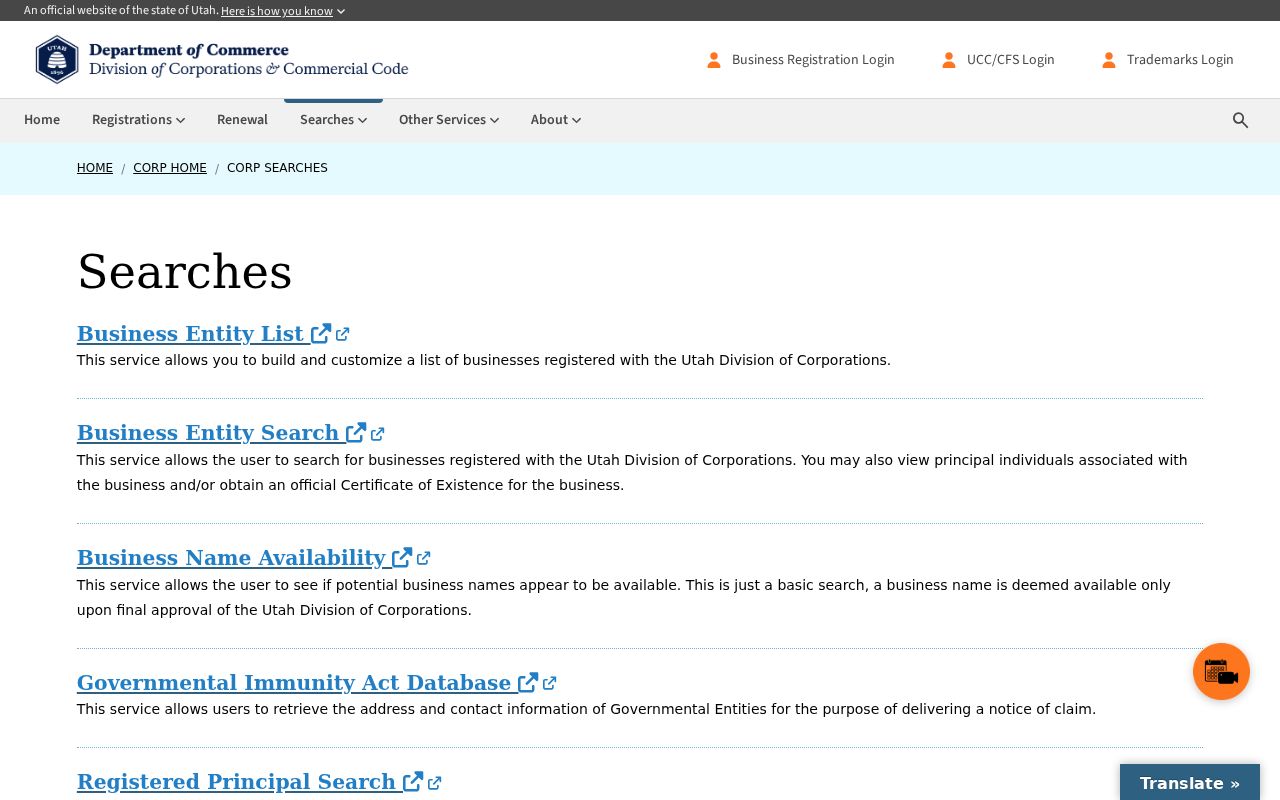
The Utah business-search page shows the entity and registered-principal routes. Treat a business address as an affiliation clue.
Utah unclaimed property is another free name lead. The search requires a last or business name and permits first name, city, and ZIP. Exact matches appear first, followed by similar-name claims. A claim still requires proof through the Treasurer, and a fee demand to release a claim is a warning sign.
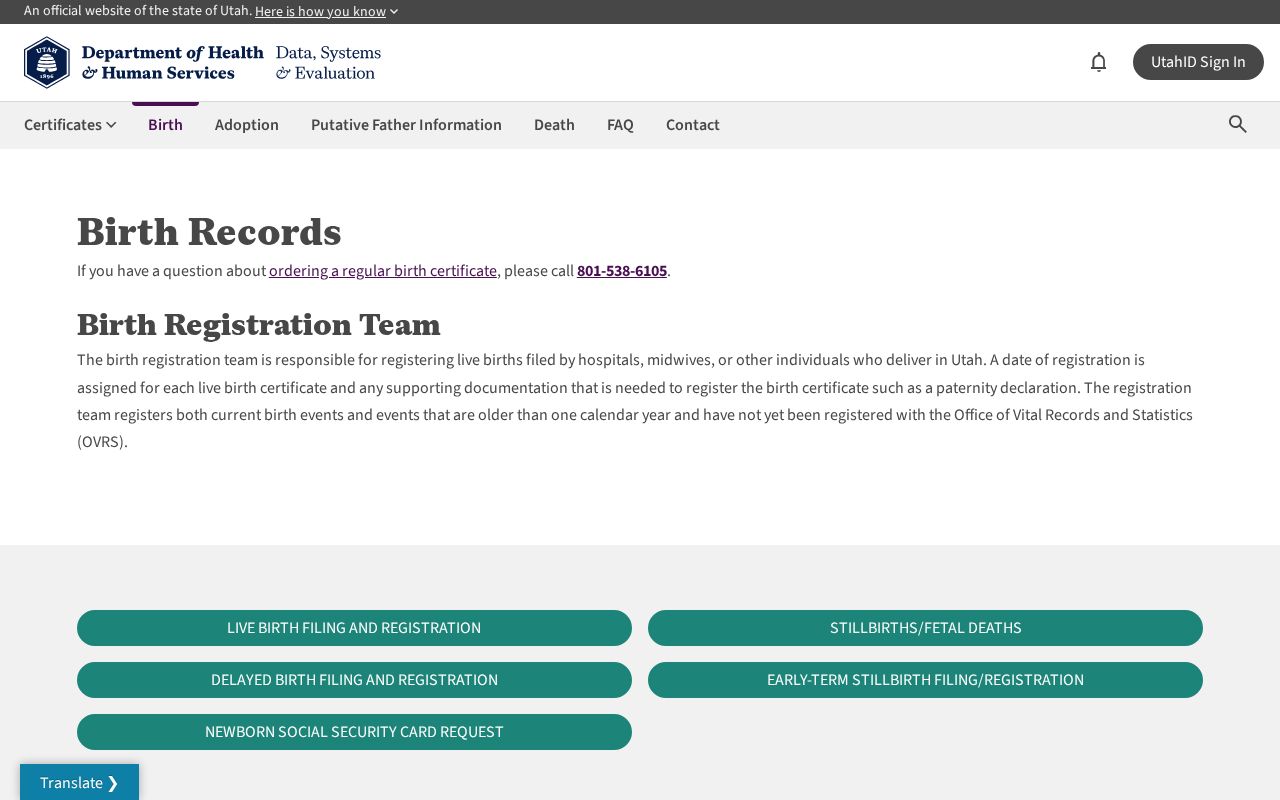
The Utah Vital Records access page shows the state’s eligibility and application route. It supports a relationship or event check, not an unrestricted current resident list.
Historic Vital Records Versus Certificates
County birth records open after 100 years and county death records after 50 years. Salt Lake County Archives lists birth records from 1890–1911 and death records from 1847–1949. State birth records from 1905 forward and death records from 1905 forward use eligibility, proof, ID, and application rules for recent copies. Marriage and divorce abstracts cover Utah events from 1978–2010, while a full marriage license comes from the County Clerk and a full divorce decree from the district court.
Utah’s inspected birth form asks for relationship, proof or legal need, contact details, certificate count, fee, signature, and date. The initial fee is $22 with additional copies at $10 and optional expedite at $15. The death form uses decedent, date and place of death, relationship, purpose, payment, ID, and contact fields, with an initial $30 copy and additional copies at $10.
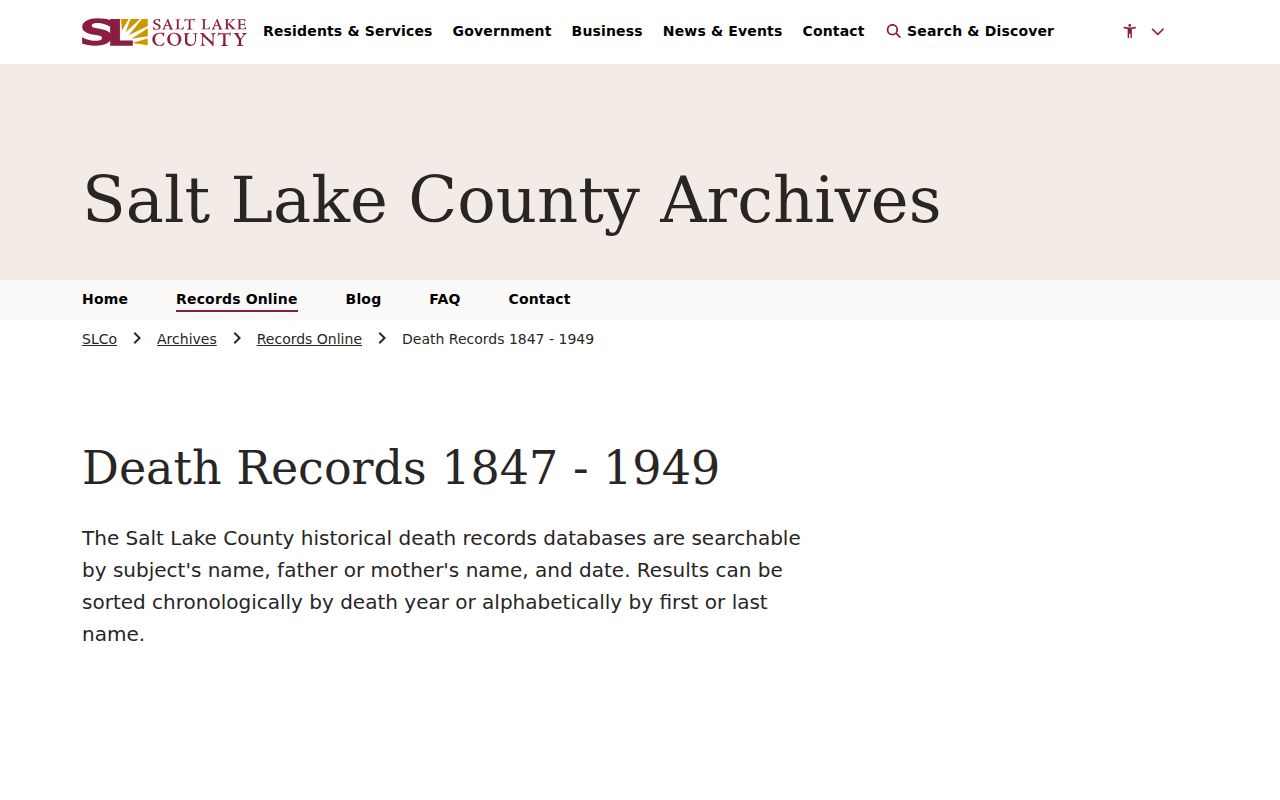
The Salt Lake County historic death index demonstrates the name, parent, and year search route. Inspect the image when OCR or a prefix variation makes the result uncertain.
When the Official Trail Stops
GRAMA sends a targeted request to the custodian that holds a city or county record. Cottonwood Heights City Recorder requests can concern minutes, planning packets, permits, police records, or a named city-held correspondence file. The request should identify the subject, time span, record type, and preferred format. It does not require an agency to create a new answer or decide whether someone lives at an address.
Correct a field at its source: Assessor for parcel data, Recorder for an instrument, court clerk for case history, election office for voter status, and registrar for vital records. Keep a search log with the URL, date, exact spelling, result wording, and stated purpose. Stop at historical association when the available evidence cannot support a current-location claim.
What a Public Result Actually Shows
A court result may show county, court, case number, type, filing date, party name, party code, judge, attorneys, hearings, disposition, judgment, appeal indicator, and available documents. A public address appears only when it was filed and remains public. A vital index may show a name, parent, year, and image link. A parcel card may show owner, situs, mailing, year built, value, tax district, and exemption fields.
These are record fields, not a single identity score. Write “party address filed in a case” or “owner of record on the Assessor page” so the description stays tied to what the custodian actually published.
Same-Name Matches Need a Second Field
Salt Lake County and Utah systems can contain several people with the same name. Use a middle initial, suffix, spouse, address, parcel, case date, license number, or entity role to separate them. Search `Mc` and `Mac`, apostrophe and spacing variants, and the name as filed. Xchange results can reach 500, so jurisdiction, type, and date filters matter.
A possible match becomes stronger when two independent systems agree on a non-sensitive field. It remains a possibility when all that matches is a surname and city.
Make a Narrow Records Request
Utah GRAMA requests go to the holding entity and should name the record with reasonable specificity. A Cottonwood Heights City Recorder request can identify an address, parcel, planning case, permit number, meeting date, or correspondence range. Salt Lake County Recorder copy requests ask for party names, dates, document type, and known index or book clues. State vital forms require the relationship, proof, ID, contact fields, and payment required for the record.
Use the request route when the public index is incomplete, not to ask an office to infer a person’s current home. A focused request is easier to review, price, and appeal.